

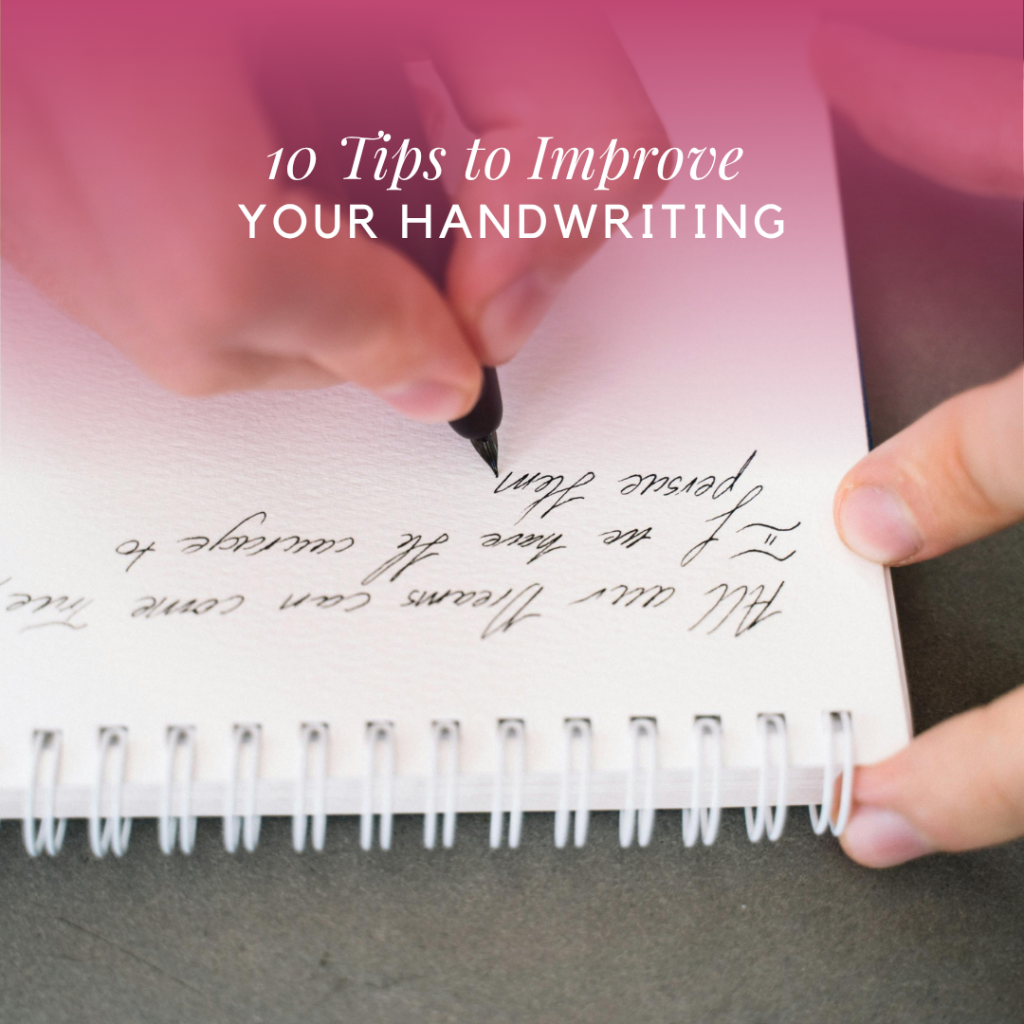
We may type a lot these days, but there are still plenty of reasons to pick up a pen!
You might copy a favorite scripture into your journal or take notes during the meeting. Maybe you enjoy sending cards to the friends or writing letters in the ministry.
If you have been wishing your handwriting were a little neater or easier to read, you can improve it with practice. You do not need to completely change the way you write either. A few small adjustments can make a noticeable difference.
1. Slow Down a Little
Most handwriting gets messier when we rush. Try writing slightly slower than you normally would. Give yourself enough time to finish each letter before moving into the next one.
You do not have to write painfully slowly. Just easing up on your usual speed can make your writing much easier to read.
2. Find a Pen You Like
Different pens can make your handwriting feel completely different.
Try a few that you already have and notice which one feels easiest to control. You may prefer a fine tip for small meeting notes or a slightly thicker pen when writing cards. Once you find one you like, keep a few nearby so you are not constantly switching between pens.
3. Loosen Your Grip
If your hand starts hurting after a few minutes of writing, you may be gripping the pen too tightly. Try relaxing your fingers and holding the pen with a little less pressure. Let your hand move naturally across the page.
This can make longer writing sessions much more comfortable.
4. Pay Attention to Letter Size
Uneven letter sizes can make handwriting look messy even when the individual letters are perfectly readable. Try keeping lowercase letters around the same height. Notice whether some of your letters suddenly become much larger than the ones around them.
Lined paper can be especially helpful while you work on this.
5. Give Your Words Some Space
Look at the spaces between your words. If they are too close together, an entire sentence can begin to look crowded. If the gaps are very wide, the writing can feel disconnected. Aim for a comfortable amount of space that makes each word easy to see.
6. Practice the Letters That Give You Trouble
You probably do not need to relearn the entire alphabet. Look at your own handwriting and find the letters that tend to get messy. Maybe your lowercase r is difficult to read or your s changes shape every time you write it.
Fill a few lines practicing those specific letters. Then practice them inside actual words.
7. Copy Scriptures for Practice
If you want something meaningful to use for handwriting practice, copy a favorite scripture. Choose a verse and write it slowly. Pay attention to the shape of your letters while also thinking about what you are writing. You can keep a notebook specifically for scriptures you copy by hand and add to it whenever you feel like practicing.

8. Find a Style That Feels Natural
Your handwriting does not need to look like someone else’s. You may naturally write with rounded letters or prefer narrow ones. Your writing might have a slight slant or be mostly upright. Work with the way your hand naturally moves. Focus on making your own handwriting clear and consistent.
9. Use Real Writing as Practice
You do not have to sit down with handwriting worksheets every day.
Pay attention to your writing while taking meeting notes. Slow down when addressing an envelope or writing a card to someone. Use your journal as another opportunity to practice.
The writing you already do can become your practice.
10. Keep a Sample From Today
Write a short paragraph and date it. After you have practiced for a few weeks, write the same paragraph again. You may notice changes that are hard to see from day to day. Keep doing this occasionally if improving your handwriting is something you enjoy working on.
Give It Time
Handwriting is something most of us have been doing the same way for years, so changing it takes a little practice. Pick one or two things you want to improve first. Maybe you want to slow down or make your letters more consistent. Once that begins to feel natural, work on something else.
Eventually, those little adjustments start showing up everywhere you write, from your meeting notebook to the next encouraging card you send to a friend.
Filed under
Fun Ideas



Comments
No comments yet - be the first to share your thoughts!
Log in or join free to leave a comment.